

A startup rarely gets a second chance to explain itself clearly. You might have a strong product, early traction, and a capable team, but if the market does not understand who you are, what you do, and why you matter, growth gets harder than it should be. That is why choosing the right branding agency for startups is not just a design decision. It is a business decision that affects perception, conversion, and long-term market position.
For founders, the pressure is real. Budgets are tight, timelines are short, and every investment needs to move the company forward. Branding can feel abstract at first, especially when compared with hiring salespeople, building product, or running paid campaigns. But weak branding creates friction everywhere. It slows down trust, confuses prospects, and makes marketing less efficient.
What a branding agency for startups should actually do
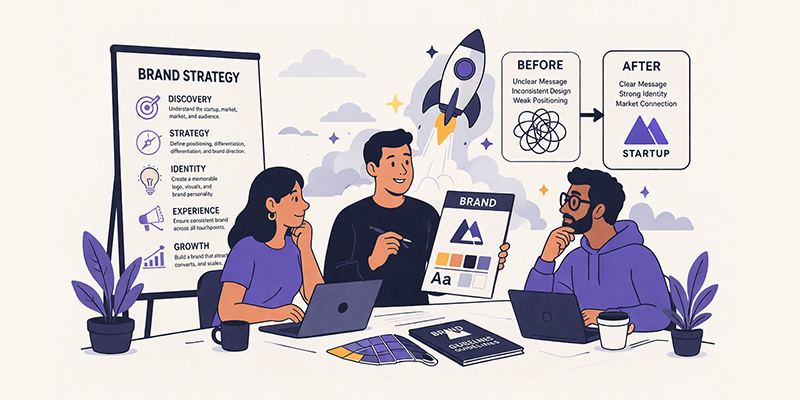
A strong agency does more than create a logo and choose a color palette. It helps shape how your business is understood. That includes your positioning, messaging, visual identity, website experience, and the way your brand shows up across digital and physical touchpoints.
For startups, this work has to be practical. The right agency should build a brand system that works in the real world – on your website, in investor decks, on social channels, in sales presentations, in email campaigns, and even in offline materials such as brochures or event displays. Branding only becomes valuable when it helps the business communicate consistently and confidently.
This is where many founders make a costly mistake. They hire one vendor for a logo, another for a website, and someone else for digital marketing. The result is often disconnected execution. The visuals do not match the message. The website looks polished but does not convert. Paid traffic lands on pages that fail to reinforce the brand promise. A more integrated approach usually produces better results.
Why startups need branding earlier than they think
Branding is often treated like something to revisit after growth begins. In practice, early branding helps create that growth. It gives potential customers a faster way to trust you, gives your team a clearer way to speak about the business, and gives your marketing a stronger foundation.
Early-stage companies especially benefit from clarity. If your startup is entering a crowded category, your brand helps define your difference. If your offer is new or technical, your brand helps make it understandable. If your sales cycle depends on credibility, your brand reduces hesitation before a prospect ever speaks to your team.
This does not mean every startup needs an expensive, months-long branding engagement. It means startups need the right level of strategic brand work for their stage. A pre-seed company may need sharp positioning, a flexible identity, and a launch-ready website. A growing startup may need a deeper brand system, stronger content structure, and better alignment between brand and lead generation.
How to evaluate a branding agency for startups
The first thing to look for is strategic thinking. Good branding is not decoration. Ask how the agency approaches positioning, audience understanding, messaging, and business goals. If the conversation stays focused only on visual style, you may end up with attractive assets that do not support growth.
The second factor is execution range. Startups move quickly, and handoffs between multiple vendors can slow momentum. An agency that can handle branding, design, website development, and digital marketing execution brings a practical advantage. It creates continuity from strategy to launch and reduces the risk of fragmented work.
The third factor is startup fit. Some agencies are built for large corporate timelines, layered approvals, and big-budget rebrands. That is not always useful for a founder trying to launch in six weeks or refine a brand while acquiring customers. Look for a team that understands speed, iteration, and commercial realities.
Portfolio matters too, but read it carefully. Do not just ask whether the work looks good. Ask whether it looks right for the target audience. Strong startup branding should feel purposeful, not generic. It should show that the agency can adapt its creative approach to different industries, customer types, and stages of business maturity.
The trade-off between speed, cost, and depth

Every founder wants branding that is fast, affordable, and excellent. In reality, there is usually a trade-off. A lower-budget project may get you essential assets quickly, but not the deeper research and strategic development of a larger engagement. A highly detailed process may produce stronger long-term clarity, but it takes more time and investment.
That does not mean you have to choose poorly. It means you should choose honestly. If you need to launch soon, prioritize the brand elements that create immediate impact: positioning, core messaging, logo system, visual direction, and a conversion-focused website. If you are preparing to scale, invest more heavily in brand architecture, content structure, and channel consistency.
An experienced agency will help you make those decisions instead of overselling a package you do not need. The best partnerships are built on fit, not inflation.
What deliverables matter most in the early stage
Not every startup needs a massive brand book. What matters is having the assets that support action. In many cases, that starts with a clear brand strategy, a defined visual identity, and practical usage guidelines. From there, the most valuable outputs often include a website, sales deck, social media templates, launch graphics, and marketing collateral that supports outreach.
If your business depends on digital visibility, branding should also connect smoothly to SEO, paid media, and social campaigns. A startup website should not only look credible. It should load well, communicate clearly, and guide visitors toward action. Good branding improves performance when it is tied to user experience and marketing execution.
That integrated thinking is what many founders need most. A brand should not live in a PDF and then disappear when campaigns begin. It should shape every customer-facing experience.
Signs you are hiring the wrong agency
If an agency cannot explain how branding affects sales, lead generation, or market perception, that is a concern. If they promise overnight transformation with no discovery process, that is another. Startups need agility, but they also need informed decisions.
You should also be cautious if the agency has no clear process for implementation. A strong identity is useful only when it is applied consistently across your website, social presence, presentations, and promotional materials. Strategy without rollout often leads to expensive rework.
Another warning sign is creative work that looks identical from one client to the next. Your startup needs a distinct market presence, not a recycled visual formula.
Why an integrated Partner often delivers more value more value
For startups, momentum matters. When branding, website design, development, and digital marketing are planned together, the business benefits from alignment. Messaging supports search visibility. Design supports conversion. Visual identity strengthens ad creative and social consistency. Offline materials reinforce the same brand story prospects see online.
This is where a full-service partner can create real commercial value. Instead of managing separate freelancers or agencies, founders get one coordinated team focused on the same outcome: building a brand that looks credible, communicates clearly, and supports growth across channels. That approach reduces friction and helps preserve quality from concept to execution.
At D24 Ads, this integrated model is central to how startup brands are built and launched. Creative work is developed with business use in mind, so branding does not stop at appearance. It carries through to websites, digital campaigns, and the broader customer experience.
The right question is not “Do we need branding?”
A better question is, “What kind of branding will help us grow from here?” That shift matters because it turns branding from a creative expense into a practical growth tool. The answer depends on your stage, your market, your offer, and how quickly you need to move.
A startup entering a competitive space may need a sharper strategic position. A founder-led company may need a more polished identity to win trust faster. A business with traction may need stronger brand consistency so its marketing performs better. Different situations require different levels of support, but all of them benefit from clarity.
The best branding work gives a startup something useful right away: a clearer story, a stronger presence, and a more confident way to enter the market. If your agency can deliver that while also helping execute across web, content, and promotion, the investment tends to pay off far beyond the initial launch.
Choose a partner that understands both the creative side of brand building and the commercial side of growth. Startups do not need branding for branding’s sake. They need branding that helps the business move.